How to Use A Dictionary of Colour Combinations to Build Outfits That Suit You
Quick answer: Start with your own colour palette, not the book. Flip through A Dictionary of Colour Combinations and only keep the combinations whose colours already live in your palette. Then put the strongest colour near your face and the quietest one on your bottom half. Comfort on the bottom, colour up top.

Pretty on the page, wrong on you
You've probably seen this little book on Instagram, Pinterest or a friend's coffee table. Page after page of gorgeous colour pairings, and you think, "I want to dress like that."
So you copy one. Mustard with plum, say. It looks stunning in the book. Then you put it on and it looks... fine. A bit tired. Maybe a bit like you've borrowed someone else's outfit.
Here's the so what: a combination can be beautiful and still not be yours. The book shows you colours that work together. It can't tell you which colours work with you. That's the missing piece, and it's exactly what this post will fix.
What is A Dictionary of Colour Combinations?
It's a small, pocket-sized book (published as A Dictionary of Color Combinations) based on the work of Sanzo Wada (1883–1967), a Japanese artist, teacher and kimono and costume designer. Wada published his colour studies in six volumes in the 1930s. The modern edition from Seigensha gathers 348 colour combinations, each made of two, three or four colours.
Designers, artists and decorators have used it for years. It's also a brilliant tool for getting dressed, as long as you use it the right way round.

How to use it to build an outfit that suits you
Start with your palette, not the book. Your palette is your filter. Without it, you're picking colours because they look nice on paper, not because they light up your face. If you've had your colours done, grab your swatch wallet.
Hunt for combinations that live in your palette. Hold your swatches up against each page. Keep the combinations where every colour (or nearly every colour) has a match in your wallet. Pop a sticky tab on those pages. You'll be surprised how many "maybes" drop away.
Match the feel of your palette. Look past the colours themselves to their character. Is your palette light or deep? Soft and muted, or clear and bright? Warm or cool? If you suit soft, dusty colours, skip the combinations that look punchy and electric, even if each colour is technically close.
Put the strongest colour near your face. This is where the 3 Cs come in. Your best, brightest colour goes up top: a top, a scarf, earrings or lipstick. That's your Colour.
Let the quieter colours do the comfy work. Use the softer or darker colours from the combination for pants, jeans, skirts and shoes. That's your Comfort. Comfy on the bottom plus the right colour up top equals Confidence.
Map each colour to a piece. A two-colour combination is a top and a bottom. A three-colour one adds a jacket, bag or shoes. A four-colour one gives you an accessory to play with too.
Shop your wardrobe first. Pull out anything that matches each colour. You may already own the outfit and have just never put it together.
Snap the page. Take a photo of your favourite combinations and save them in an album on your phone. Next time you're in the shops, you've got a ready-made shopping list.
Fiona's Insight: Look at what's already in your face. If you've got blue eyes, a rosy cheek or golden hair, find a combination that repeats those colours and wear it. Your outfit then looks like it belongs to you, because it does. It's the same reason all neutrals can make some women look drab: if there's colour in your features, your clothes need some too.
Common mistakes to avoid
Copying a combination because it's trending. Trends change every season. Your palette doesn't.
Wearing colours in the same amounts as the page. The swatches sit side by side in equal blocks. Outfits don't have to. Let one colour lead and use the others as accents.
Putting the hero colour on your bottom half. Bright pants pull the eye down. Keep your best colour up near your face, where it does the most work.
Forgetting about black and white. Not everyone can wear them near the face. If they're not in your palette, swap them for the nearest neutral that is.
FAQ
Do I need to know my colours before using the book?
You'll get far more out of it if you do. Without your palette, you're guessing. With it, the book becomes a menu of outfits made for you.
Can I use it if I've never had a colour analysis?
Yes, for inspiration. Just know that some combinations will flatter you and some won't, and it's hard to tell which by eye alone.
How many colours should one outfit have?
Two or three is the sweet spot for everyday wear. Save four-colour combinations for when you want to make a statement.
Where can I buy the book?
It's widely sold in bookshops, design stores and gallery shops, and online.
Ready to find your colours?
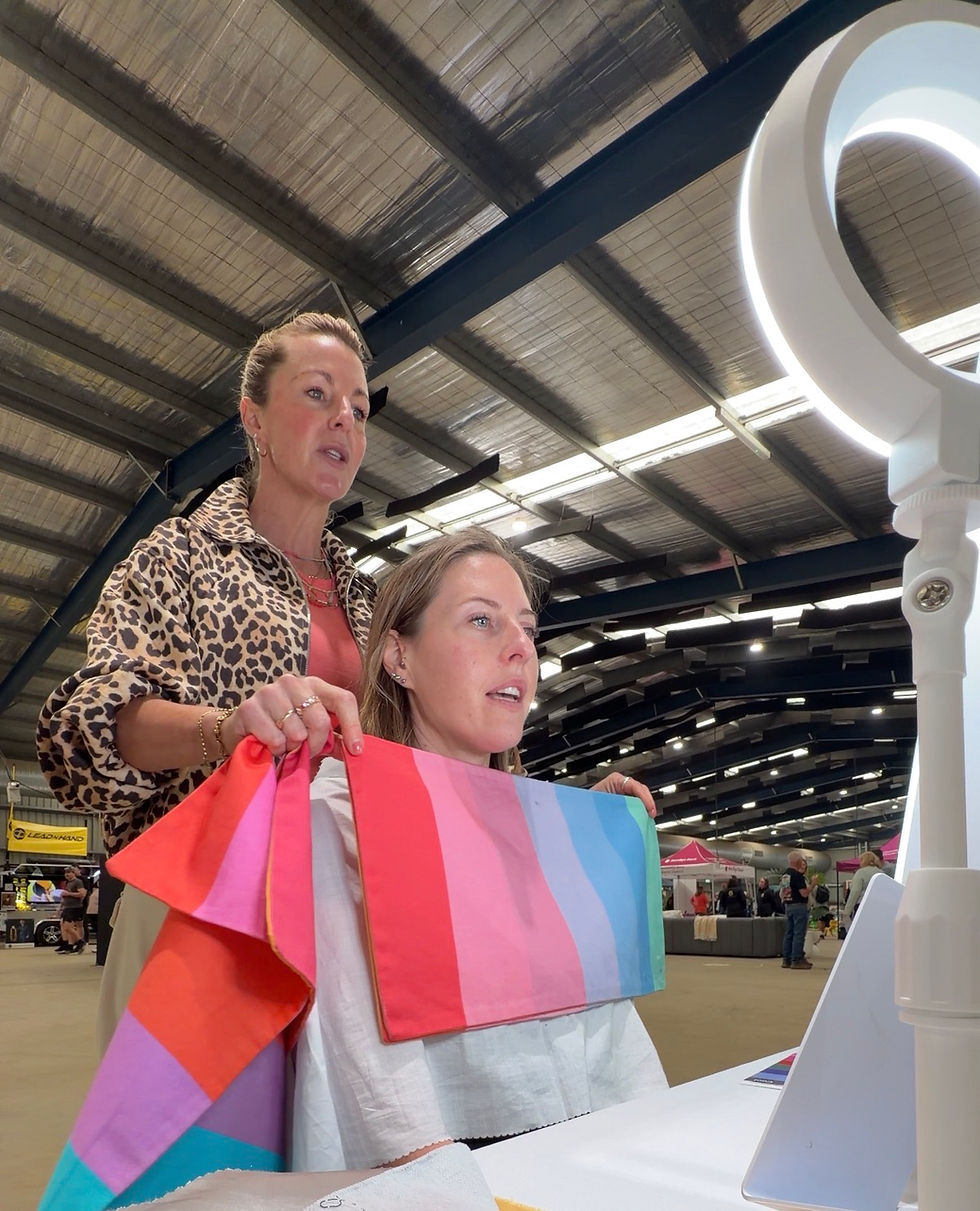
The book gives you the combinations. A colour analysis tells you which ones are yours. Fiona Lovell is an AOPI-certified Colour Analyst and Image Consultant in Doreen, Melbourne, who has draped thousands of clients. Fiona helps women 40+ dress with confidence, in person or online.
Fe XO


Comments